AVR NottinghamHealthTitle no. 8
Implants, Bridges, and Dentures: Why the Modern Option Wins
Comparing implants, bridges and dentures for missing teeth: stability, jawbone health, cleaning, comfort and long-term upkeep, and when implants make sense.
3 min
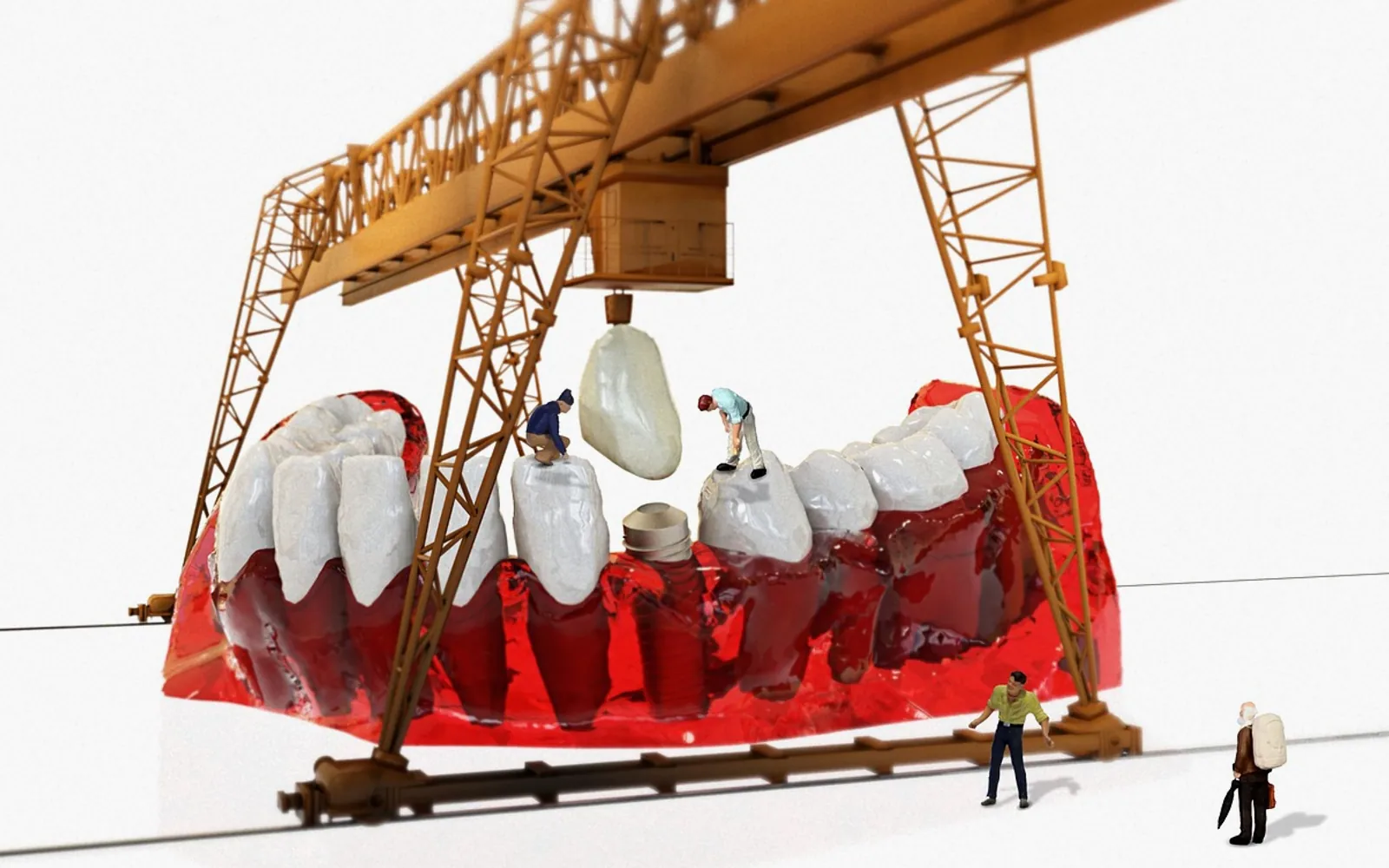
Losing a tooth, or several, used to leave people with two main choices: a bridge fixed to the neighbouring teeth, or a removable plate. Both still help many patients. Implants have changed the conversation, though, because they replace the missing root as well as the visible crown. That difference shows up in almost every comparison that matters day to day.
Three options side by side
| Question | Removable denture | Fixed bridge | Implant |
|---|---|---|---|
| How is it held? | Suction, gum contact and sometimes clasps or adhesive | Crowns on the teeth either side | A post that bonds with the jawbone |
| Effect on other teeth | Clasps can put strain on remaining teeth | Healthy neighbours are reshaped for crowns | Neighbouring teeth are left alone |
| Jawbone | No root, so bone gradually shrinks | Bone under the gap still shrinks | Chewing forces reach the bone |
| Cleaning | Taken out and cleaned separately | Special threaders needed under the false tooth | Brushed and flossed like a natural tooth |
Stability you stop thinking about
Many denture wearers, especially with lower plates, describe a background worry: will it move when I talk, laugh or bite into something firm? The tongue and cheeks constantly push against a removable plate. Bridges do not move, but they depend on the teeth beside the gap. An implant is anchored in bone, so a crown on top behaves much like a natural tooth. Patients often say the biggest change is simply no longer thinking about their teeth at the dinner table.
Why the jawbone matters
Bone stays strong when it is used. A tooth root passes chewing forces into the jaw, and that pressure helps maintain it. When the root is gone, the body slowly reabsorbs bone in that area. Over the years this can change the fit of a denture and even the shape of the lower face. A bridge fills the space visually but does nothing for the bone beneath it, and a plate pressing on the gum can add to the shrinkage. An implant restores that load, which is the main reason dentists describe it as protecting the foundation.
Cleaning, taste and the long view
- Hygiene: plaque collects easily under a bridge, which puts the supporting teeth at risk. An implant crown can be brushed and flossed on its own.
- Taste and speech: an upper denture covers the palate, which can dull flavours and change how some sounds are formed. An implant only takes up the space of the tooth it replaces.
- Upkeep: dentures need relines, adhesives and eventual replacement; bridges may need redoing if a supporting tooth fails. Implants cost more at the outset, and whether that balances out over time depends on each person's mouth and situation.
Practices that focus on restorative work can talk patients through these trade-offs with scans and a clear plan. Teams like Summerbrook Dental & Implants Fort Worth offer implant consultations that explain how the post, abutment and crown come together, so patients understand each stage before treatment starts.
Is an implant right for you?
Implants are not suitable for everyone. Bone volume, gum health, smoking, diabetes control and some medications all affect whether an implant can be placed and how well it heals. Sometimes bone grafting is needed first; sometimes a bridge or a well-made denture remains the better fit. Only a dentist who has examined you and reviewed X-rays or scans can say which option suits your mouth, so a proper assessment is always the first step.
Our reading habits
Principles behind every article we research
A few rules decide which sources we trust and how much weight a claim can carry before it reaches the page.
Guidance written for patients by public health services is our first port of call.
When trusted bodies disagree, the article says so instead of choosing the boldest view.
Any brand or company selling the product under discussion is never treated as neutral.
Doses and personal targets stay out, because they belong in a conversation with a professional.
Every finished draft is checked by a second writer against the sources it relies on.
The end
Guide details
- Title no.
- 8 / 30
- series
- Health
- Published
- Revised
- Time to read
- 3 min
- Contents
- 5 sections