AVR NottinghamMedicalTitle no. 25
Home Sleep Apnea Test: What Happens and How It Compares With a Lab Study
Home testing for sleep apnea explained: who is offered it, what the kit measures, how the night works, tips for a clean recording and when a lab study is wiser.
4 min
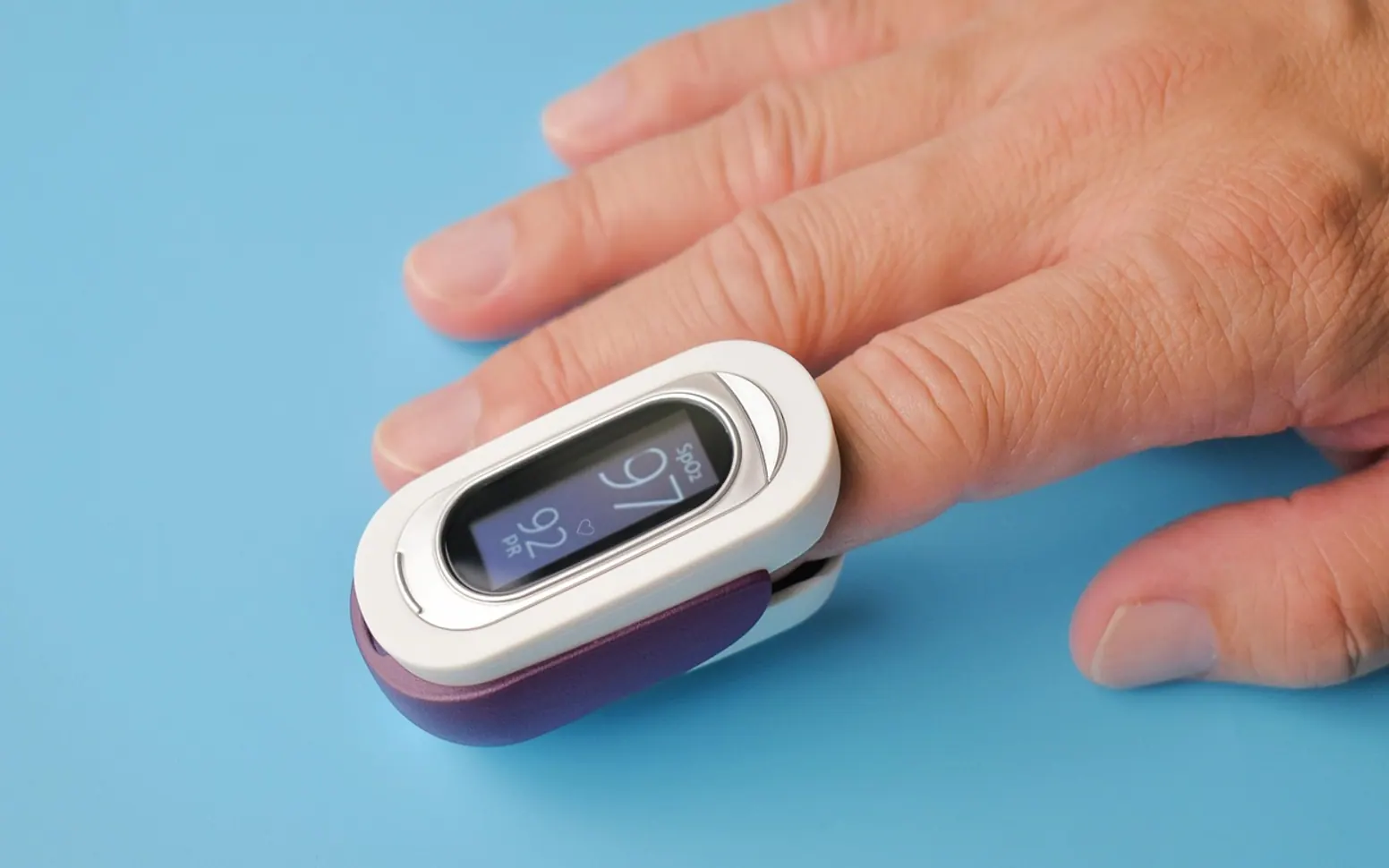
A home sleep apnea test is a simplified overnight recording you do in your own bed with a small kit, usually arranged by a doctor when obstructive sleep apnea is suspected. It tracks breathing, blood oxygen and heart rate while you sleep, and a clinician then reviews the data. It is more convenient than a night in a sleep laboratory, but it records less, so it suits some people better than others.
Why a test might be suggested
Doctors usually consider testing when several of these signs appear together:
- Loud, regular snoring, especially with pauses, snorts or gasps that a partner notices
- Feeling unrefreshed despite enough time in bed
- Falling asleep easily during the day, while reading, watching television or as a passenger
- Morning headaches or a dry mouth on waking (our headache guide covers the many other everyday causes)
- Waking several times a night to pass urine
- High blood pressure that is hard to control
Questionnaires about daytime sleepiness and snoring are often used at the first appointment to decide whether testing makes sense.
What is in the kit
Home devices vary, but most combine a few simple sensors linked to a small recorder worn on the chest or wrist:
- A nasal cannula, a thin tube under the nose that senses airflow
- One or two elastic belts around the chest and abdomen that track breathing effort
- A finger clip that measures oxygen levels and pulse
- A position sensor that notes whether you are on your back or side
Some newer devices sit on the wrist and finger only and estimate breathing from other signals. Most home kits do not record brain waves, which means they cannot show sleep stages the way a lab study does.
How the night works
- Collect or receive the kit. Some clinics show you how to fit it in person; others post it with written or video instructions.
- Follow your normal evening. Unless told otherwise, keep to your usual routine and medicines. Avoid an unusual amount of alcohol, which can change results.
- Fit the sensors at bedtime in the order shown, then switch on the recorder.
- Sleep as normally as you can. Any position is fine unless the instructions say otherwise.
- Note anything unusual, such as a long spell awake or a sensor coming loose, on the form provided.
- Return the kit as instructed. A trained staff member, often a sleep technologist, processes the recording, and a doctor interprets it.
The people behind the scenes are described in our article on what a sleep technologist does.
Tips for a clean recording
- Remove nail varnish or false nails from the finger that will wear the clip.
- Tape the cannula tubing lightly to the cheeks if it tends to slip.
- Keep a glass of water nearby so you do not need to get up and disturb the wires.
- If you wake and find a sensor off, reattach it and carry on.
Home test or lab study?
| Home sleep apnea test | In-lab sleep study | |
|---|---|---|
| Where | Your own bed | A sleep centre bedroom |
| What it records | Airflow, breathing effort, oxygen, pulse, position | All of those plus brain waves, eye movements, muscle activity, heart tracing and video |
| Staff present | No | A technologist monitors overnight |
| Best suited to | Adults with a fairly high chance of uncomplicated obstructive sleep apnea | Complex cases and other suspected sleep disorders |
| Main limitation | Can underestimate apnea, as it cannot tell exactly when you are asleep | Less familiar setting; waiting lists can be longer |
A lab study is usually preferred when doctors suspect conditions such as narcolepsy, unusual behaviours during sleep or a movement disorder, when there is significant heart or lung disease, or when a home result is unclear but symptoms persist. The stages a lab study can capture are outlined in our guide to sleep cycles.
Understanding the results
The report usually counts how many times per hour breathing paused or became shallow, along with how far oxygen levels dropped. The doctor uses that count, together with your symptoms, to decide whether apnea is present and whether it is mild, moderate or severe. Treatment then depends on the picture: weight and lifestyle changes, positional strategies, a CPAP machine or a dentist-fitted oral appliance, covered in mouth guards for snoring and sleep apnea.
Sleep tracking apps and smartwatches can flag snoring or oxygen dips, but they are not diagnostic tests. Treat their readings as a reason to talk to a doctor, not as a verdict.
Common questions
Is a home sleep test accurate?
For the right person it is a reliable way to confirm obstructive sleep apnea. A negative result with ongoing symptoms may still need a lab study.
What if I barely slept that night?
Mention it when you return the kit. If too little sleep was recorded, the test may be repeated.
Who arranges the test?
Usually a GP referral to a sleep service, or a sleep doctor directly, depending on your health system. Our piece on what a sleep specialist does explains that route.
Our reading habits
Principles behind every article we research
A few rules decide which sources we trust and how much weight a claim can carry before it reaches the page.
Guidance written for patients by public health services is our first port of call.
When trusted bodies disagree, the article says so instead of choosing the boldest view.
Any brand or company selling the product under discussion is never treated as neutral.
Doses and personal targets stay out, because they belong in a conversation with a professional.
Every finished draft is checked by a second writer against the sources it relies on.
The end
Guide details
- Title no.
- 25 / 30
- Published
- Time to read
- 4 min
- Contents
- 7 sections