AVR NottinghamOral HealthTitle no. 24
Mouth Guards for Snoring and Sleep Apnea: How Oral Appliances Work
How sleep apnea mouth guards and snoring mouth guards work, custom versus boil-and-bite devices, likely side effects and why a diagnosis should come first.
4 min
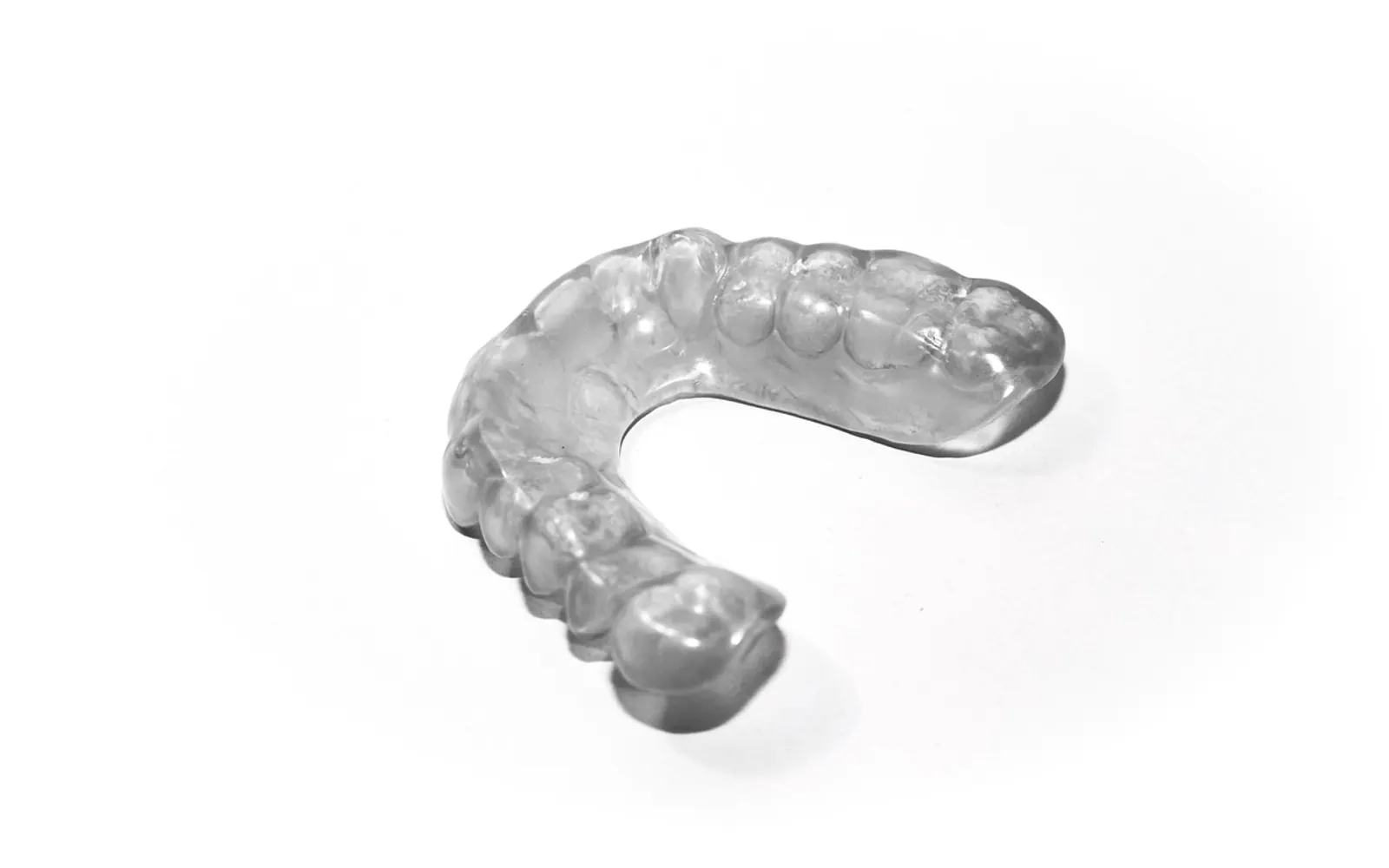
Sleep apnea mouth guards, more properly called oral appliances, keep the airway open during sleep by holding the lower jaw or the tongue slightly forward. They can reduce snoring and are a recognised option for some people with mild to moderate obstructive sleep apnea, particularly those who cannot get on with a CPAP machine. They work best when a sleep doctor has confirmed the diagnosis and a dentist has fitted and adjusted the device.
Why the airway narrows at night
During sleep, the muscles of the throat, tongue and soft palate relax. In many people the airway stays open enough for quiet breathing. In others the soft tissues sag and vibrate as air passes, which is snoring. In obstructive sleep apnea, the airway narrows so much or collapses so completely that breathing slows or stops for a few seconds at a time, over and over, until the brain briefly rouses the sleeper to restart it. Most people never remember these arousals, but they keep interrupting the stages of a normal sleep cycle and leave many feeling exhausted.
Types of oral appliance
| Device | How it works | Points to consider |
|---|---|---|
| Mandibular advancement device (custom) | Two linked trays hold the lower jaw a little forward, pulling the tongue base away from the throat | Made from scans or impressions; adjustable; the main type used for sleep apnea |
| Mandibular advancement device (boil-and-bite) | Same principle, moulded at home in hot water | Cheaper, but often bulkier and less precise; not designed to treat diagnosed apnea |
| Tongue-retaining device | A soft bulb holds the tongue forward by gentle suction | An option for people with few or unsuitable teeth |
| Grinding night guard | A flat splint that protects teeth from wear | Does not move the jaw, so it does not treat snoring or apnea |
The last row trips many people up. A guard made for clenching and grinding, like those described in our article on how to stop grinding your teeth, sits passively over the teeth. A snoring mouth guard has to reposition the jaw to make a difference to the airway.
Who they tend to suit
- People who snore but have been checked and do not have significant sleep apnea
- Adults with mild to moderate obstructive sleep apnea
- People with more severe apnea who have genuinely tried CPAP and cannot tolerate it, as a second-line option agreed with their doctor
- Those who travel often and want something compact
They are less suitable for people with very few healthy teeth, active gum disease, loose teeth or significant jaw joint problems. A dentist will check these before going ahead.
Why diagnosis comes first
Snoring on its own is a nuisance. Snoring with pauses in breathing, gasping, morning headaches or heavy daytime sleepiness may point to apnea, which is linked with problems such as high blood pressure and drowsy driving. A device bought online might quieten the snoring while leaving the apnea untreated. A sleep assessment, often starting with a home sleep apnea test, settles the question. Our page on what a sleep specialist does explains who arranges it.
Getting a custom device: the usual steps
- Assessment. A doctor confirms the diagnosis and agrees an oral appliance is reasonable.
- Dental examination. A dentist checks teeth, gums and jaw joints and takes scans or impressions.
- Fitting. The device is fitted with the jaw advanced a small amount to start with.
- Adjustment. Over the following weeks, the jaw position is moved forward in small steps until snoring and symptoms improve without causing too much discomfort.
- Follow-up test. For apnea, a repeat sleep study checks whether the device is doing its job.
- Regular reviews. Dental check-ups monitor the bite and the condition of the appliance.
Side effects to expect
Most are mild and settle within the first few weeks. They include jaw or tooth soreness in the morning, extra saliva or a dry mouth, and a feeling that the back teeth do not meet properly for a short while after removing the device. Over months and years, some people notice small changes in their bite, which is why dental follow-up matters. Gentle jaw exercises in the morning, often shown by the dentist, can help things feel normal again.
Looking after the appliance
- Rinse it after waking and brush it gently with a soft brush and cool water.
- Avoid hot water, which can warp the material, and whitening toothpastes, which can scratch it.
- Let it air dry and store it in its case, away from pets.
- Take it to every dental check-up so wear and fit can be checked.
Common questions
Will a mouth guard stop snoring completely?
It often reduces snoring, sometimes a great deal, but results vary. Weight, alcohol, sleeping position and nasal congestion all still play a part.
Can I just buy one online?
Over-the-counter devices may help simple snoring, but they are not a substitute for diagnosis. If you have signs of apnea, get assessed first.
What about taping the mouth instead?
Tape works on a different idea and has its own limits. See mouth taping for sleep for who should avoid it.
Our reading habits
Principles behind every article we research
A few rules decide which sources we trust and how much weight a claim can carry before it reaches the page.
Guidance written for patients by public health services is our first port of call.
When trusted bodies disagree, the article says so instead of choosing the boldest view.
Any brand or company selling the product under discussion is never treated as neutral.
Doses and personal targets stay out, because they belong in a conversation with a professional.
Every finished draft is checked by a second writer against the sources it relies on.
The end
Guide details
- Title no.
- 24 / 30
- series
- Oral HealthSleep
- Published
- Time to read
- 4 min
- Contents
- 8 sections