AVR NottinghamHealthTitle no. 34
Lysosomes Explained: How Cells Recycle Proteins
What lysosomes are, how they break down worn-out proteins, what the enzyme cathepsin D does inside them and why scientists study this cellular clean-up.
5 min
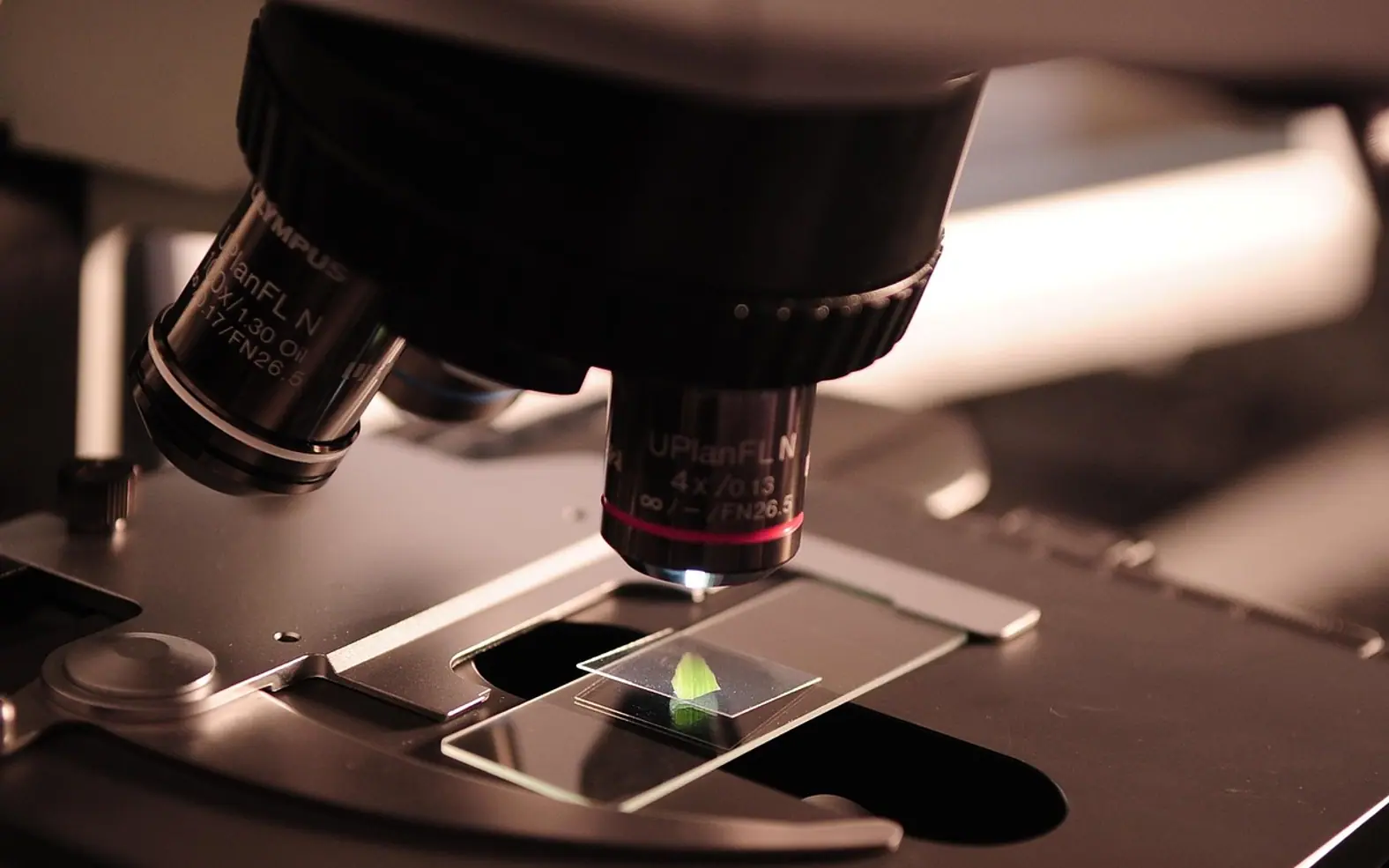
Lysosomes are small, sealed compartments inside almost every cell that break down worn-out proteins, damaged parts and unwanted material so the building blocks can be reused. They work like a recycling bay: a membrane keeps the contents apart from the rest of the cell, the inside is kept acidic, and a set of digestive enzymes cuts large molecules into small pieces. One of the most studied of those enzymes is cathepsin D, which snips proteins into fragments the cell can use again.
Why a cell needs a clean-up crew
Proteins do most of the practical work in the body. They carry signals, build structures and speed up reactions, but they are not permanent. Over time they become misfolded, damaged by everyday wear or simply no longer needed. If they piled up, they would get in the way and could clump together. A cell therefore needs a steady way to take them apart, and the lysosome is one of its main routes.
Recycling also saves resources. Proteins are made of smaller units called amino acids. Breaking an old protein down releases those amino acids, which can be fed back into making new proteins. This turnover goes on all the time, including while we rest, which is one reason scientists describe the deep, restorative stages of a night's sleep in terms of repair and maintenance as well as rest.
How material reaches the lysosome
Lysosomes do not hunt for rubbish on their own. Material is delivered to them along a few well-described routes:
- From outside the cell. The cell surface folds inwards to pull in fluid, nutrients or particles, forming small bubbles that are passed along and eventually merge with a lysosome.
- From inside the cell. In a process called autophagy (literally "self-eating"), the cell wraps a portion of its own contents, such as an old structure or a cluster of faulty proteins, in a membrane and sends the package to a lysosome.
- Selected single proteins. Some individual proteins carry tags that mark them for transport straight into the lysosome.
Once the cargo arrives, the membranes fuse and the enzymes get to work.
What cathepsin D does
Lysosomes hold dozens of different enzymes, each suited to a type of molecule: some handle fats, some sugars, some genetic material. The enzymes that cut proteins are called proteases, and a family of them, the cathepsins, does much of the protein work inside lysosomes.
Cathepsin D is a protease that works best in acidic conditions, which suits the inside of a lysosome. It cuts long protein chains at particular points, turning them into shorter fragments that other enzymes can finish off.
Cathepsin D starts out as a longer, inactive version that is trimmed into its working form once it reaches the lysosome, which helps stop it working in the wrong place. Plenty of other enzymes in the body rely on minerals to function, which is one reason dietitians talk about everyday nutrients such as zinc; our guide to signs of running low on zinc covers that side of things.
Why researchers study lysosomes
Because lysosomes sit at the centre of cellular housekeeping, they turn up in many lines of laboratory research. In general terms, scientists are interested in:
| Research area | What scientists want to understand |
|---|---|
| Ageing | Whether cellular recycling slows down as cells get older and what that might mean for how tissues cope over time. |
| Rare inherited conditions | A group of rare genetic conditions, often called lysosomal storage disorders, involves a missing or faulty lysosomal enzyme, so material builds up instead of being broken down. |
| Brain cells | Nerve cells live a long time and cannot easily be replaced, so how they clear old proteins is an active question. |
Much of this is early research carried out on cells and tissue samples in the lab. It helps scientists map how cells work rather than offering anything a person can act on today. If you have concerns about an inherited condition in your family or about your own health, the right first step is to talk to a doctor, who can explain what testing or support is available.
How labs detect the enzyme
Lysosomes and their enzymes are far too small to see with the naked eye, so researchers rely on tools that make a specific protein visible. The most common of these are antibodies: proteins that recognise and stick to one particular target. Attach a coloured or glowing label to an antibody, and wherever it binds, the target shows up.
To find out where an enzyme sits in a cell, or how much of it a sample contains, labs often use a cathepsin D antibody as a research reagent, alongside other checks. Such reagents are sold for research use only and are not used for diagnosing or treating anyone. Typical methods include:
- Western blotting. Proteins from a sample are separated by size on a gel, transferred to a membrane and probed with the antibody. Because cathepsin D starts as a longer precursor and is trimmed later, this method can show the different forms as separate bands.
- Microscopy staining. Cells or thin tissue slices are treated with a labelled antibody, and the stain reveals where the enzyme is found, for example in small dots that match the lysosomes.
- Activity tests. Rather than counting the protein, some tests measure whether it is actually cutting a test substrate, which tells researchers if it is working, not just present.
Careful labs combine methods and include control samples, because one result on its own can be misleading.
Common questions
Are lysosomes the only way a cell breaks down proteins?
No. Cells also have a second major system that handles many short-lived proteins one at a time. The two routes share the workload, and researchers study how they hand material between them.
Can diet or supplements boost lysosome function?
Claims like this are common online, but they run well ahead of the evidence, which mostly comes from early laboratory work. A balanced diet, sleep and activity support general health; for anything specific, ask a doctor or pharmacist before trying a product.
Lysosomes rarely get attention, yet they keep cells tidy and supplied with reusable parts every minute of the day. Understanding enzymes like cathepsin D helps scientists build a clearer picture of how that quiet recycling works.
Our reading habits
Principles behind every article we research
A few rules decide which sources we trust and how much weight a claim can carry before it reaches the page.
Guidance written for patients by public health services is our first port of call.
When trusted bodies disagree, the article says so instead of choosing the boldest view.
Any brand or company selling the product under discussion is never treated as neutral.
Doses and personal targets stay out, because they belong in a conversation with a professional.
Every finished draft is checked by a second writer against the sources it relies on.
The end
Guide details
- Title no.
- 34 / 34
- series
- Health
- Published
- Time to read
- 5 min
- Contents
- 6 sections